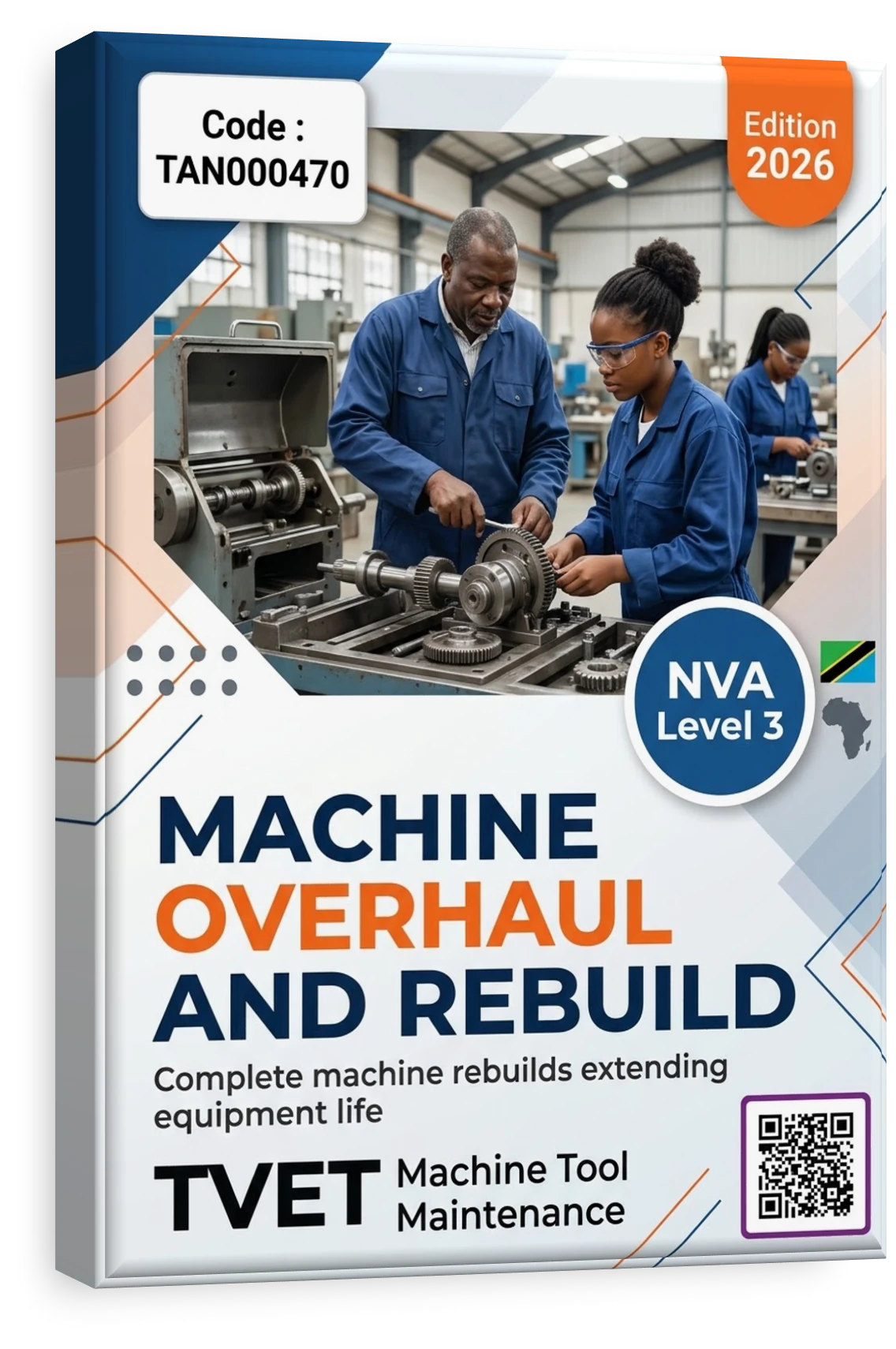
Machine Overhaul and Rebuild
Level : NVA Level 3 — Machine Tool Maintenance
Curriculum Officiel – Competence-Based Curriculum (CBC) – VETA Tanzania.
PRELIMINARIES
1. Understanding the Essence of Machine Overhaul
In the bustling industrial landscape of Tanzania, the longevity and efficiency of machinery are paramount. Understanding the intricacies of machine overhaul and rebuild is crucial for maintaining the backbone of industries such as the Port of Dar es Salaam and the tanzanite mining sector. This guide aims to equip learners with the essential competencies required for machine tool maintenance, ensuring that equipment life is extended through meticulous rebuilds.
2. Aligning with Tanzania’s Vocational Education Framework
This curriculum is meticulously designed to align with the Tanzanian Competence-Based Curriculum (CBC), focusing on practical skills and real-world applications. Learners will engage in hands-on activities, simulating industrial challenges faced in sectors like tourism in Serengeti and Zanzibar, and the dynamic Kariakoo market. The goal is to foster a deep understanding of machine maintenance, preparing students for VETA certification and beyond.
3. Emphasizing Real-World Industrial Challenges
The curriculum places a strong emphasis on addressing real industrial challenges prevalent in Tanzania. From the heavy machinery used in the Port of Dar es Salaam to the precision tools in tanzanite mining, learners will be exposed to a variety of scenarios. This approach ensures that they are well-prepared to tackle the diverse demands of the Tanzanian industrial sector, enhancing their problem-solving skills and technical expertise.
Chapter I. Introduction to Machine Overhaul and Rebuild
I.1 The Importance of Machine Maintenance
Machine maintenance is the cornerstone of industrial efficiency. In Tanzania, where industries like tourism and mining are vital, ensuring that machinery operates at peak performance is essential. This section will introduce learners to the fundamental principles of machine maintenance, highlighting its role in extending equipment life and reducing operational costs.
I.2 Overview of Machine Overhaul Processes
An overhaul involves a comprehensive inspection and repair of machinery to restore it to a like-new condition. This section will provide an overview of the overhaul processes, including disassembly, inspection, repair, and reassembly. Learners will gain insights into the systematic approach required for effective machine overhaul, ensuring that they can apply these principles in real-world scenarios.
I.3 Identifying Wear and Tear in Machinery
Wear and tear are inevitable in any machinery, but early identification can prevent catastrophic failures. This section will teach learners how to recognize signs of wear and tear, such as unusual noises, vibrations, or performance declines. By understanding these indicators, students will be better equipped to perform timely interventions, thereby extending the life of the equipment.
I.4 The Economic Impact of Effective Machine Maintenance
Effective machine maintenance not only extends equipment life but also has significant economic benefits. This section will explore the cost savings associated with regular maintenance, reduced downtime, and increased productivity. Learners will understand the financial implications of neglecting maintenance, reinforcing the importance of their role in machine tool maintenance.
Chapter II. Tools and Equipment for Machine Overhaul
II.1 Essential Tools for Machine Maintenance
Having the right tools is crucial for any machine maintenance task. This section will introduce learners to the essential tools required for machine overhaul, including wrenches, screwdrivers, torque wrenches, and diagnostic equipment. Understanding the function and proper use of these tools is fundamental for performing effective maintenance.
II.2 Safety Equipment and Protocols
Safety is paramount in any industrial setting. This section will cover the necessary safety equipment, such as gloves, goggles, and ear protection, as well as safety protocols to follow during machine overhaul. Learners will be trained on how to create a safe working environment, minimizing the risk of accidents and injuries.
II.3 Diagnostic Tools and Their Applications
Diagnostic tools play a critical role in identifying issues within machinery. This section will delve into various diagnostic tools, such as vibration analyzers, thermal imaging cameras, and oil analysis kits. Learners will learn how to use these tools to detect problems early, allowing for timely repairs and maintenance.
II.4 Maintenance of Tools and Equipment
Just as machinery requires maintenance, so do the tools used for maintenance. This section will teach learners how to properly maintain and store their tools to ensure they remain in good working condition. Regular maintenance of tools will enhance their effectiveness and longevity, contributing to overall efficiency in machine overhaul tasks.
Chapter III. Disassembly and Inspection of Machinery
III.1 Systematic Approach to Disassembly
Disassembly is a critical step in the machine overhaul process. This section will guide learners through a systematic approach to disassembling machinery, ensuring that components are removed in a logical sequence. Proper disassembly techniques will be emphasized to prevent damage to components and facilitate easier reassembly.
III.2 Inspection Techniques for Machinery Components
Once disassembled, each component must be thoroughly inspected for wear, damage, or defects. This section will cover various inspection techniques, including visual inspection, dimensional checks, and non-destructive testing methods. Learners will gain the skills needed to identify issues that require repair or replacement.
III.3 Documentation of Findings During Inspection
Accurate documentation is essential for effective machine maintenance. This section will teach learners how to document their findings during the inspection process. Proper documentation ensures that all issues are recorded, facilitating informed decision-making and tracking the history of maintenance activities.
III.4 Common Issues Identified During Inspection
During inspections, certain common issues may arise, such as worn bearings, corroded parts, or misaligned components. This section will highlight these common issues and provide learners with strategies for addressing them. Understanding these typical problems will prepare students to handle a wide range of maintenance scenarios.
Chapter IV. Repair and Replacement of Machinery Components
IV.1 Repair Techniques for Worn Components
Repairing worn components is a cost-effective way to extend the life of machinery. This section will cover various repair techniques, such as welding, machining, and surface treatment. Learners will gain hands-on experience in repairing common machine parts, enhancing their practical skills.
IV.2 Criteria for Component Replacement
Sometimes, repair is not feasible, and replacement is necessary. This section will outline the criteria for determining when a component should be replaced rather than repaired. Factors such as cost, availability, and the extent of damage will be discussed to help learners make informed decisions.
IV.3 Sourcing and Installing Replacement Parts
Sourcing the right replacement parts is crucial for maintaining machinery performance. This section will guide learners on how to source quality replacement parts and install them correctly. Proper installation techniques will be emphasized to ensure that new components function as intended.
IV.4 Testing Components Post-Repair or Replacement
After repair or replacement, components must be tested to ensure they meet performance standards. This section will cover testing procedures, including functional tests and performance checks. Learners will learn how to verify that repaired or replaced components are functioning correctly before reassembling the machinery.
Chapter V. Reassembly and Testing of Machinery
V.1 Systematic Approach to Reassembly
Reassembly is the final step in the machine overhaul process. This section will guide learners through a systematic approach to reassembling machinery, ensuring that components are installed in the correct order and orientation. Proper reassembly techniques will be emphasized to prevent future issues.
V.2 Lubrication and Adjustment of Machinery
Proper lubrication and adjustment are essential for the smooth operation of machinery. This section will cover the types of lubricants used, lubrication points, and adjustment procedures. Learners will gain the skills needed to ensure that machinery is well-lubricated and properly adjusted during reassembly.
V.3 Functional Testing of Reassembled Machinery
Once reassembled, machinery must undergo functional testing to ensure it operates correctly. This section will outline the steps for conducting functional tests, including load tests and performance checks. Learners will learn how to identify and address any issues that arise during testing.
V.4 Final Inspection and Sign-Off
The final inspection is a critical step before machinery is returned to service. This section will cover the procedures for conducting a final inspection, including a thorough check of all components and systems. Learners will understand the importance of obtaining sign-off from relevant authorities to ensure that the machinery is safe and ready for use.
Chapter VI. Preventive Maintenance Strategies
VI.1 Developing a Preventive Maintenance Plan
Preventive maintenance is key to extending equipment life. This section will guide learners in developing a comprehensive preventive maintenance plan, including scheduling regular inspections, maintenance tasks, and documentation. A well-structured plan will help industries like the Port of Dar es Salaam and tanzanite mining maintain their machinery efficiently.
VI.2 Importance of Regular Lubrication and Cleaning
Regular lubrication and cleaning are essential components of preventive maintenance. This section will emphasize the importance of these tasks in preventing wear, corrosion, and contamination. Learners will understand how consistent lubrication and cleaning routines contribute to the longevity and performance of machinery.
VI.3 Monitoring Machinery Performance
Continuous monitoring of machinery performance is crucial for early detection of issues. This section will cover various monitoring techniques, such as vibration analysis, temperature monitoring, and performance tracking. Learners will learn how to use these methods to identify potential problems before they become critical.
VI.4 Training and Educating Maintenance Personnel
Effective preventive maintenance relies on well-trained personnel. This section will discuss the importance of ongoing training and education for maintenance staff. Learners will understand the role of continuous learning in staying updated with the latest maintenance techniques and technologies.
Chapter VII. Troubleshooting Common Machinery Issues
VII.1 Identifying Symptoms of Machinery Problems
Recognizing the symptoms of machinery problems is the first step in troubleshooting. This section will teach learners how to identify common symptoms, such as unusual noises, vibrations, or performance issues. Understanding these signs will enable them to take prompt action.
VII.2 Diagnostic Procedures for Troubleshooting
Once symptoms are identified, diagnostic procedures are necessary to pinpoint the root cause of the problem. This section will cover various diagnostic techniques, including visual inspection, testing, and analysis. Learners will gain the skills needed to conduct thorough diagnostics.
VII.3 Common Solutions for Machinery Issues
After diagnosing the problem, implementing the correct solution is crucial. This section will provide learners with common solutions for various machinery issues, such as replacing worn parts, adjusting settings, or performing repairs. Practical examples will be used to illustrate these solutions.
VII.4 Documenting Troubleshooting Processes
Accurate documentation of troubleshooting processes is essential for future reference. This section will teach learners how to document their troubleshooting steps, findings, and solutions. Proper documentation ensures that similar issues can be addressed more efficiently in the future.
Chapter VIII. Safety Protocols in Machine Maintenance
VIII.1 Understanding Safety Regulations and Standards
Safety regulations and standards are critical in machine maintenance. This section will introduce learners to the relevant safety regulations and standards in Tanzania, ensuring they understand the legal requirements and best practices for safe maintenance operations.
VIII.2 Implementing Safety Measures During Maintenance
Implementing safety measures is essential to protect both workers and machinery. This section will cover various safety measures, such as locking out/tagging out procedures, using personal protective equipment, and maintaining a clean work environment. Learners will learn how to create a safe maintenance environment.
VIII.3 Emergency Response Procedures
Being prepared for emergencies is crucial in any industrial setting. This section will outline emergency response procedures, including evacuation plans, first aid protocols, and emergency shutdown procedures. Learners will understand the importance of quick and effective responses to emergencies.
VIII.4 Continuous Safety Training and Awareness
Continuous safety training and awareness are vital for maintaining a safe work environment. This section will discuss the importance of regular safety training sessions, awareness campaigns, and safety audits. Learners will understand how ongoing education contributes to a culture of safety.
Chapter IX. Case Studies and Practical Applications
IX.1 Case Study: Machine Overhaul in the Port of Dar es Salaam
This case study will explore a real-world example of machine overhaul in the Port of Dar es Salaam. Learners will analyze the challenges faced, the steps taken, and the outcomes achieved. This practical application will provide insights into the complexities of maintaining heavy machinery in a busy port environment.
IX.2 Case Study: Preventive Maintenance in Tanzanite Mining
In this case study, learners will examine the implementation of preventive maintenance in the tanzanite mining industry. The focus will be on the strategies used to extend equipment life and ensure continuous operation in a high-demand environment. Practical examples will illustrate the benefits of effective maintenance.
IX.3 Case Study: Troubleshooting in Kariakoo Market
This case study will delve into troubleshooting common machinery issues in the bustling Kariakoo market. Learners will explore the diagnostic procedures, solutions implemented, and the impact on market operations. This practical scenario will highlight the importance of quick and effective troubleshooting.
IX.4 Case Study: Safety Protocols in Serengeti Tourism
The final case study will focus on safety protocols in the Serengeti tourism industry. Learners will examine the safety measures implemented to protect both workers and visitors during machine maintenance activities. This practical example will underscore the critical role of safety in tourism-related industries.
APPENDICES
A. Maintenance Checklist Template
This appendix provides a comprehensive maintenance checklist template that learners can use to ensure all necessary tasks are completed during machine overhaul and maintenance. The template includes sections for disassembly, inspection, repair, reassembly, and final inspection, providing a structured approach to maintenance activities.
B. Diagnostic Tools Guide
This appendix offers a detailed guide to the diagnostic tools commonly used in machine maintenance. It includes descriptions, applications, and best practices for using tools such as vibration analyzers, thermal imaging cameras, and oil analysis kits. Learners will gain a deeper understanding of how to effectively utilize these tools in their maintenance tasks.
C. Safety Protocols Handbook
This appendix presents a handbook of safety protocols specifically tailored for machine maintenance in various Tanzanian industries. It covers topics such as lockout/tagout procedures, personal protective equipment, emergency response plans, and continuous safety training. Learners will have a valuable resource to ensure they maintain a safe working environment.


Discussion (0)
Aucune intervention pour le moment. Soyez le premier à contribuer.
Votre intervention Annuler la réponse