
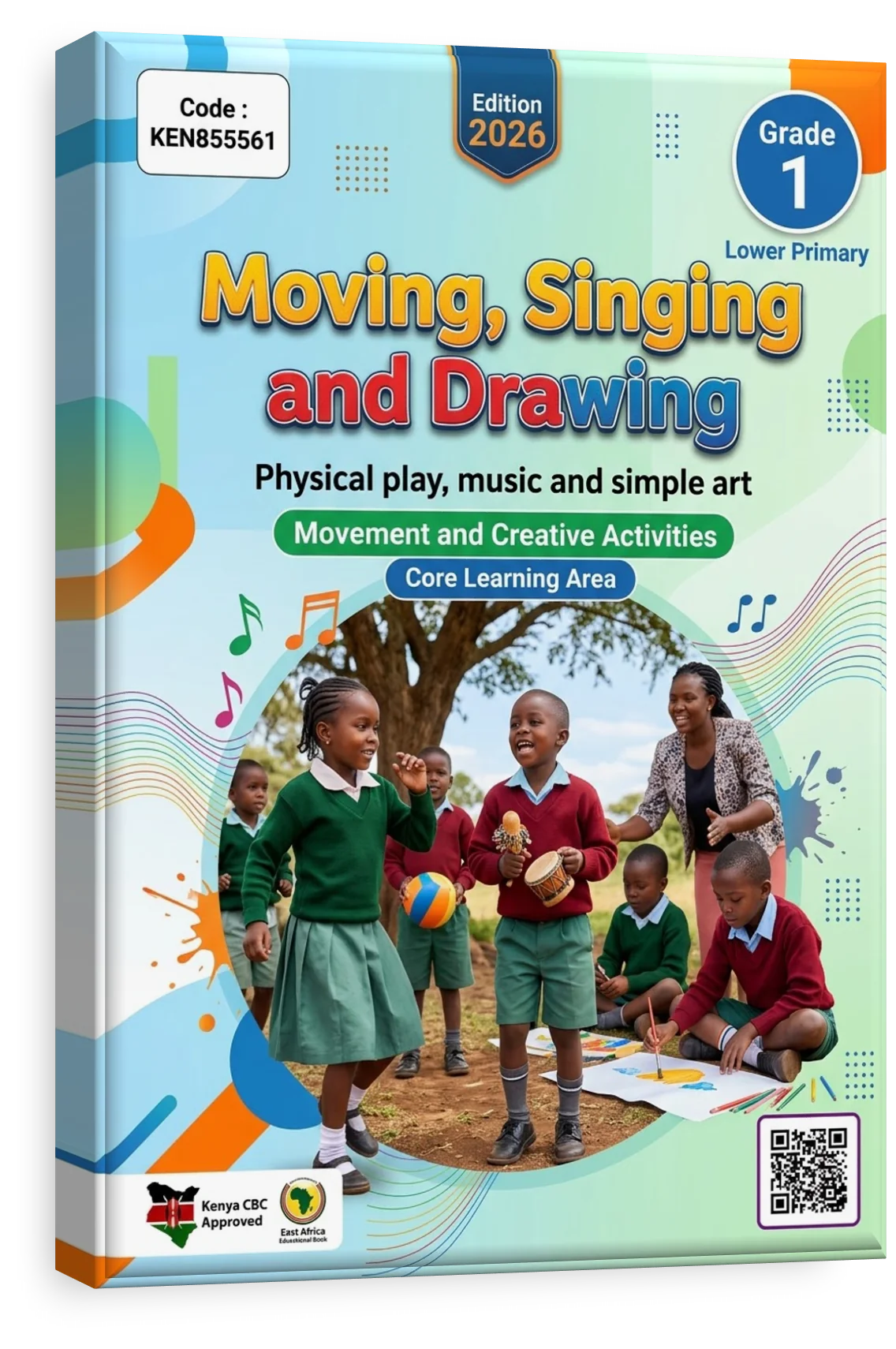
Moving, Singing and Drawing
Level: Grade 1 (Lower Primary) — Core Learning Area
Official Curriculum – Competency-Based Curriculum (CBC) – Kenya Institute of Curriculum Development (KICD).
PRELIMINARIES
1. Welcome to Moving, Singing and Drawing
Grade 1 learners across Kenya begin Movement and Creative Activities by discovering that their bodies, voices and hands are powerful tools for learning, long before any worksheet is opened. This core learning area blends physical play, singing and simple art into one joyful subject, drawing on games already familiar from home compounds in Kisumu, Nakuru and Nairobi. Lesson objective: introduce learners to movement, music and art as connected ways of expressing ideas, feelings and stories about daily village and family life. Operational benefit: children arrive each lesson confident, expecting active fun rather than silent copying from a chalkboard.
2. Why This Learning Area Matters in Grade 1
Movement, singing and drawing together build coordination, confidence and communication skills that support every other subject a Grade 1 learner studies, from counting steps while jumping to naming colours used in a drawing. Kenyan classrooms, often crowded, benefit because active lessons channel children’s natural energy productively rather than fighting against it. Lesson objective: explain to teachers why this integrated learning area deserves daily attention equal to literacy and numeracy lessons. Operational benefit: learners who move, sing and draw regularly develop stronger fine motor control, listening skills and self-expression that carry forward into Grade 2.
3. A Guide for Parents and Teachers
Parents and teachers share responsibility for nurturing a Grade 1 learner’s creativity, so every activity in this book uses materials already found at home or in a modest classroom: bottle tops, maize husks, old newspaper and chalk. No expensive equipment or specialist training is required to deliver quality lessons in movement, music and art. Lesson objective: equip every caregiver, whether in a rural Rift Valley homestead or an urban Nairobi estate, with clear, low-cost guidance for supporting each chapter. Operational benefit: children practise moving, singing and drawing continuously across home and school, deepening skills through everyday repetition and encouragement.
Chapter I. Moving My Body with Confidence
I.1 Walking, Running and Stopping Safely
Grade 1 learners begin movement lessons by mastering basic locomotor skills: walking steadily along a line, running across the schoolyard and stopping instantly when a teacher calls out or claps once sharply. Knowledge taught links each movement to careful control of speed, balance and spacing, so no child collides with a classmate during group practice near Lake Victoria shoreline schools or dusty Rift Valley compounds. Lesson objective: develop basic locomotor control and listening response through repeated, supervised outdoor practice sessions. Operational benefit: learners gain body awareness and self-control skills needed for safe play throughout the entire school day.
I.2 Jumping, Hopping and Balancing Games
Building on walking and running, learners now practise jumping over a low rope, hopping on one foot across chalk-drawn squares and balancing briefly on a narrow plank or raised stone found around the compound. Knowledge taught introduces the ideas of balance, landing softly and controlling the body’s centre while attempting each new movement challenge safely. Lesson objective: strengthen gross motor coordination and balance through progressively challenging jumping and hopping games played in pairs or small groups. Operational benefit: learners develop stronger leg muscles and confidence, reducing falls during ordinary playground games and village outdoor activities.
I.3 Moving to a Beat and a Rhythm
Once learners control basic movements confidently, lessons introduce moving in time to a drumbeat, clapped rhythm or a familiar song, matching footsteps or arm swings to each steady beat heard during the activity. Knowledge taught connects physical movement to rhythm, an idea learners already recognise from traditional dances performed at family celebrations and community gatherings across many Kenyan communities. Lesson objective: develop rhythmic awareness and body coordination by matching movement speed and pattern to varied musical beats. Operational benefit: learners prepare naturally for the singing and music chapter ahead, strengthening the link between sound and body.
I.4 Staying Safe Near Roads and Matatu Stops
Outdoor movement lessons also teach essential road safety, since many learners walk daily past busy matatu stops, boda boda stands or market junctions on their way to and from school. Knowledge taught covers looking both ways, holding an adult’s hand, waiting calmly at a designated stop and never running onto a road while chasing a ball or playing a game. Lesson objective: connect movement skills directly to practical road safety habits practised during supervised walks near the school compound. Operational benefit: learners carry safer walking and waiting habits home, reducing accidents on busy Kenyan roads and junctions.
Chapter II. Singing and Making Music Together
II.1 Learning Simple Action Songs and Rhymes
Singing begins with short action songs and rhymes already familiar from home, where mothers, grandmothers and older siblings sing while cooking ugali or walking to a nearby market in villages and towns alike. Knowledge taught pairs simple melodies with matching hand and body actions, helping learners remember words through movement rather than silent repetition of unfamiliar lyrics. Lesson objective: build vocabulary, memory and confidence through call-and-response singing practised daily during morning circle time. Operational benefit: shy learners join group singing comfortably, since actions and melody carry meaning even when individual words feel new or difficult.
II.2 Clapping Patterns and Body Percussion
Learners next explore making music using only their own bodies: clapping hands, tapping knees, stamping feet and snapping fingers in simple repeated patterns practised together as a class. Knowledge taught introduces the idea that rhythm exists without any instrument, building on traditional clapping games already played during break time across many Kenyan primary schools. Lesson objective: develop steady rhythmic control and listening skills through guided body percussion exercises performed in unison and in small groups. Operational benefit: learners strengthen concentration and teamwork, skills that support later group singing and instrumental music activities.
II.3 Making and Playing Simple Instruments
Simple instruments made from recycled materials, such as tins filled with dry beans for shakers or stretched rubber bands over a tin for a drum, let every learner experience making music without costing more than a few shillings. Knowledge taught guides learners to shake, tap or strike their homemade instrument steadily, matching sound to a counted beat called out by the teacher. Lesson objective: introduce basic instrument handling and rhythm production using affordable, locally sourced materials costing under fifty KES per learner. Operational benefit: children experience ownership and pride, caring for instruments they built with their own hands.
II.4 Singing in a Group and Taking Turns
Group singing lessons teach learners to listen to classmates’ voices, start and stop together on a teacher’s signal, and occasionally sing a short solo line before the whole class joins the chorus again. Knowledge taught builds awareness of volume, timing and turn-taking, skills practised through simple call-and-response songs sung during assembly or classroom transitions throughout the week. Lesson objective: strengthen cooperative singing skills and individual confidence through structured turn-taking within supportive group performance. Operational benefit: learners build stage confidence gradually, preparing calmly for later class performances and community celebrations without fear.
Chapter III. Drawing, Colouring and Making Marks
III.1 Holding Tools and Making My First Lines
Drawing lessons begin with correctly holding a crayon, pencil or charcoal stick between thumb and fingers, then practising straight, wavy and zigzag lines across scrap paper, cardboard or a dusty compound floor. Knowledge taught builds fine motor control needed before any recognisable picture can be attempted confidently by a young Grade 1 hand. Lesson objective: develop proper tool grip and basic line control through repeated, relaxed mark-making exercises using affordable local materials. Operational benefit: learners build hand strength and control that later support neat handwriting lessons across every other school subject studied carefully.
III.2 Drawing Simple Shapes and Objects
Once lines feel comfortable, learners progress to drawing simple closed shapes, circles, squares and triangles, then combining them to represent familiar objects such as a cooking pot, a house roof or a ripe mango. Knowledge taught links shape vocabulary already learned in mathematics lessons to visual representation practised freely on paper or slate. Lesson objective: strengthen shape recognition and basic representational drawing skills through guided practice copying real, familiar household objects. Operational benefit: learners gain visual confidence, discovering that ordinary objects around their home can become proud, recognisable drawings worth sharing with classmates.
III.3 Exploring Colour and Mixing
Colour lessons introduce the primary colours red, yellow and blue, explored through locally available crayons, charcoal or natural dyes extracted carefully from leaves, soil and flowers found around the school compound. Knowledge taught demonstrates simple colour mixing, showing learners that blue and yellow crayons blended together create green, much like colours seen in a garden or shamba. Lesson objective: build early colour vocabulary and mixing awareness through hands-on experimentation using safe, affordable materials. Operational benefit: learners describe their world more vividly, naming colours confidently across drawing, nature walks and everyday classroom conversation.
III.4 Drawing Scenes from Home and Our Landscape
Advanced drawing tasks invite learners to depict scenes from their own lives: a homestead near the Rift Valley escarpment, fishing boats along Lake Victoria, or a busy local market stall selling sukuma wiki and tomatoes at low prices. Knowledge taught encourages combining earlier shape, line and colour skills into one composed picture telling a simple personal story. Lesson objective: consolidate drawing skills learned across the chapter through a guided personal landscape or family scene drawing task. Operational benefit: learners express pride in their home environment, strengthening identity, observation skill and storytelling through visual art.
Chapter IV. Creating with Everyday and Natural Materials
IV.1 Using Recycled and Natural Materials for Art
Creative art projects now use recycled and natural materials collected from home and compound: banana leaves, maize husks, bottle tops, old sacks and dry sticks gathered during a supervised collection walk around the neighbourhood. Knowledge taught guides learners to arrange, glue or tie these materials into simple collages, masks or models representing animals, plants or community scenes. Lesson objective: develop resourcefulness and three-dimensional creative skills using affordable, environmentally friendly materials costing close to zero KES. Operational benefit: learners learn that creativity depends on imagination rather than expensive shop-bought art supplies unavailable in many homes.
IV.2 Combining Movement, Sound and Drawing
This lesson deliberately merges all three strands, asking learners to listen to a rhythm, move their whole arm freely in the air tracing that rhythm, then transfer the same flowing motion onto paper as a drawn line or pattern. Knowledge taught demonstrates that movement, sound and visual mark-making share underlying rhythm and energy, connecting the chapters studied so far in this book. Lesson objective: integrate movement, music and drawing skills through one combined cross-strand creative activity performed individually and in pairs. Operational benefit: learners understand this subject as one connected whole rather than three separate, unrelated topics.
IV.3 Playing Creative Games in Groups
Group creative games such as shape-and-sound charades, where one learner moves or hums a clue while classmates guess the hidden object or animal, build cooperation alongside movement, music and drawing skills already practised earlier in the term. Knowledge taught reinforces turn-taking, careful listening and respectful guessing within a lively, mixed-ability small group setting. Lesson objective: strengthen social skills and creative confidence through structured, enjoyable group games suited to large Kenyan classroom sizes. Operational benefit: quieter learners participate actively within smaller groups, building confidence gradually before performing in front of the entire class.
IV.4 Staying Healthy and Hygienic During Creative Play
Active creative lessons require attention to hygiene and nutrition, so learners wash hands before and after handling shared art materials, and teachers remind them to drink water and eat a balanced meal, such as ugali with sukuma wiki, before vigorous movement activities begin. Knowledge taught links energy, concentration and health directly to daily habits practised consistently at home and school. Lesson objective: build simple hygiene and nutrition habits supporting safe participation in movement, music and art lessons. Operational benefit: healthier, well-rested learners concentrate longer and avoid illness spreading through shared classroom materials and equipment.
Chapter V. Sharing and Celebrating My Creative Work
V.1 Presenting a Song to My Classmates
Learners now prepare a short, familiar song to present confidently in front of classmates, practising clear voice projection, steady rhythm and simple matching actions rehearsed over several supervised sessions during the week. Knowledge taught builds performance confidence gradually, starting with pairs, then small groups, before any learner stands fully alone before the class. Lesson objective: develop public performance confidence and vocal clarity through structured, supportive rehearsal and gentle peer feedback. Operational benefit: learners build communication confidence valuable across every future subject requiring them to speak or present in front of others.
V.2 Showing and Explaining My Drawing
Learners select a favourite completed drawing and practise explaining it simply to a partner, then the whole class, naming the shapes, colours and story represented within their chosen artwork from recent lessons. Knowledge taught builds descriptive vocabulary and pride in personal creative work, connecting art skills directly to oral language development practised throughout the term. Lesson objective: strengthen expressive language and self-confidence through guided sharing and gentle, encouraging classroom discussion of personal artwork. Operational benefit: learners practise public speaking in a low-pressure setting, building skills useful across language and social studies lessons.
V.3 Performing a Short Movement Sequence
Small groups create and rehearse a short movement sequence combining walking, jumping, balancing and rhythmic steps practised earlier, performing it confidently for classmates seated nearby on the classroom mat or outdoor field. Knowledge taught reinforces sequencing, memory and cooperative timing, since every group member must move together at the agreed moment without confusion. Lesson objective: consolidate movement vocabulary and teamwork through a structured, memorised sequence performed safely within a supervised space. Operational benefit: learners experience pride and belonging through shared physical achievement, strengthening classroom community spirit and mutual respect.
V.4 Our End of Term Creative Showcase
The term concludes with a modest creative showcase, inviting parents and community members to watch learners sing a favourite song, show a proud drawing and perform a simple movement sequence together in the school hall. Knowledge celebrated across this event consolidates every skill practised throughout movement, music and art lessons during the term, without any formal written examination required. Lesson objective: assess learner progress gently through joyful demonstration rather than pressured testing unsuitable for Grade 1 development. Operational benefit: families witness tangible growth directly, strengthening home support for continued creative learning into Grade 2.
ANNEXES
A. A Home Practice Guide for Busy Families
Busy families across Kenya can support this learning area without special equipment, using simple home practice suggestions: singing together while walking to market, drawing with charcoal on a cleared patch of ground, or practising balance games in the compound after chores. Knowledge offered lists affordable, repeatable activities costing near zero KES, matching materials already available inside most rural and urban homes. Lesson objective: extend classroom movement, music and art practice naturally into daily home routines and family time. Operational benefit: consistent home reinforcement deepens skills learned at school, strengthening the bond between family life and classroom learning.
B. Safety, Hygiene and Materials Checklist
A simple checklist helps teachers prepare safely for each lesson: cleared outdoor space free of stones and glass for movement activities, washed hands before handling shared art materials, and gathered low-cost items such as bottle tops, crayons and dry seeds. Knowledge organised into this checklist format reduces preparation time while protecting learner safety and hygiene throughout active lessons. Lesson objective: provide teachers a quick reference ensuring every movement, music and art session begins safely and efficiently. Operational benefit: fewer accidents and illnesses occur, allowing lessons to proceed smoothly across crowded Kenyan classrooms and compounds.
C. A Parent-Teacher Observation Guide
Observation notes help parents and teachers track a Grade 1 learner’s growing coordination, confidence and creativity, recording small milestones such as steady balance, confident singing or a proudly explained drawing shared during the term at school. Knowledge structured into this informal guide avoids formal grading, favouring encouraging notes jotted weekly inside a shared notebook between home and school. Lesson objective: support continuous, low-pressure observation appropriate for Grade 1 developmental stages across movement, music and art strands. Operational benefit: caregivers notice genuine growth clearly, celebrating confidence and skill built gradually throughout the school term.
Discussion (0)
Aucune intervention pour le moment. Soyez le premier à contribuer.
Votre intervention Annuler la réponse